

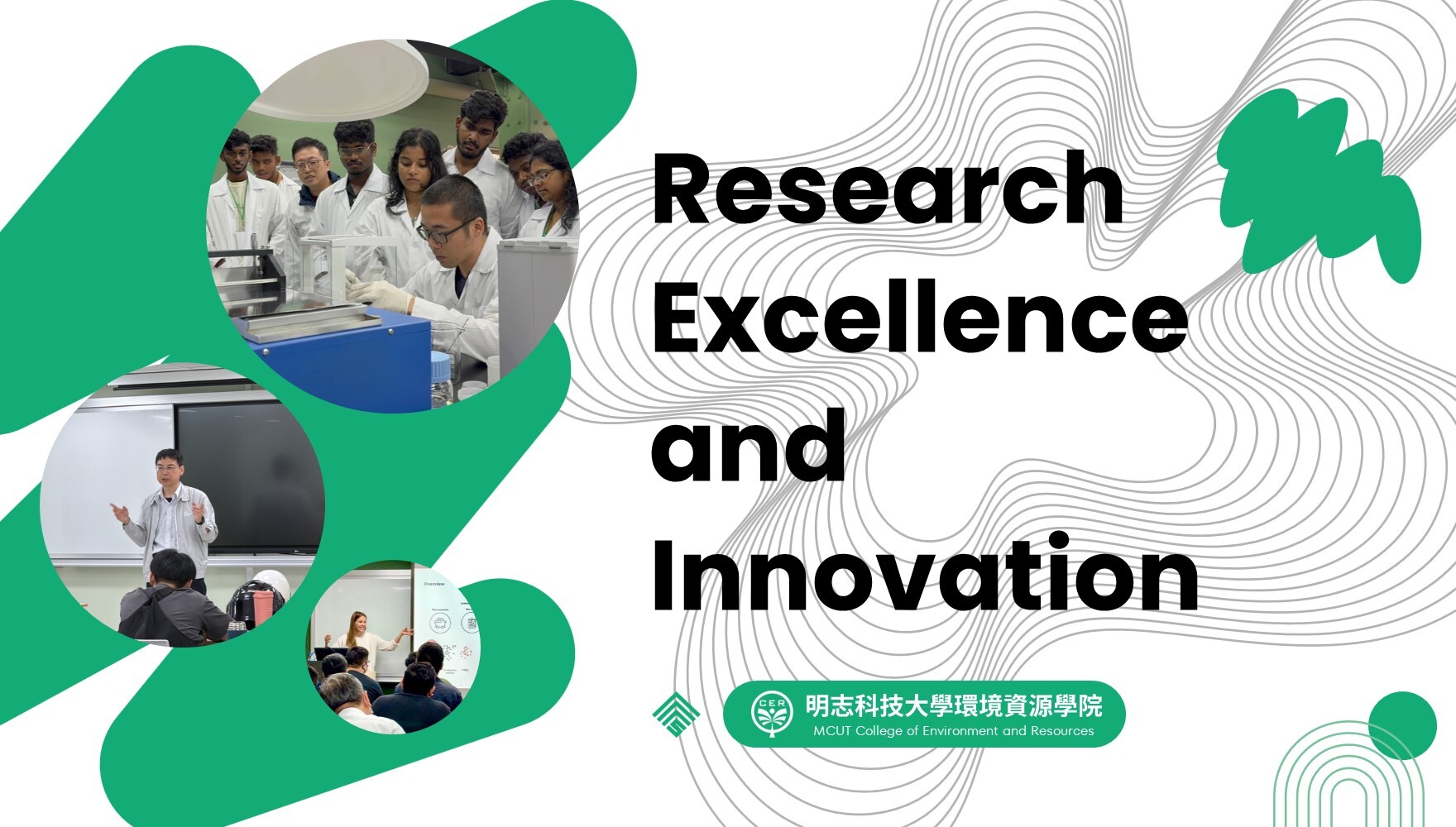
Teaching Excellence and Educational Features
CER provides interdisciplinary engineering education focused on sustainability, advanced materials, and resource management. The curriculum integrates materials science, chemical engineering, environmental and safety engineering, and semiconductor materials and processing technologies, preparing students to address emerging challenges in energy, environment, and advanced manufacturing. CER emphasizes experiential learning and hands-on training through laboratory courses, project-based learning, and capstone design projects. Close industry–university collaboration and internship opportunities allow students to gain practical experience in fields such as semiconductor manufacturing, advanced materials, and environmental technologies. Aligned with international engineering education standards, CER cultivates innovation capability, global perspectives, and professional competence, preparing graduates to contribute to sustainable development and the advancement of environmental, energy, and semiconductor technologies.
Teaching Highlights
Interdisciplinary Engineering Education
CER integrates materials science, chemical engineering, safety health and environmental engineering, and semiconductor technologies to provide interdisciplinary training for emerging industries.
Sustainability and Green Technology Focus
Courses emphasize sustainable development, resource circulation, green manufacturing, and environmental protection to address global sustainability challenges.
Industry internship-embedded learning
MCUT’s educational hallmark is its integrated industry internship model. Every undergraduate student is required to complete a full one-year internship to meet graduation requirements.
Design Thinking–Based Innovation Education
CER adopts design thinking–based teaching approaches to cultivate creativity, user-oriented problem solving, and innovation capabilities, enabling students to develop practical and impactful engineering solutions.