Optimization of Cotton Fabric Dyeing Using Urera Hypselodendron Leaf Extract and Wood Ash as a Bio-Mordant
|
MCUT Research |
|
Journal of Natural Fibers/ 2025, vol. 22, 2543121 |
|
Optimization of Cotton Fabric Dyeing Using Urera Hypselodendron Leaf Extract and Wood Ash as a Bio-Mordant |
|
Main authors: Asnake Ketema, Li-Chun Chang, Wei-Yu Chen/DDU (Ethiopia)/MCUT (Taiwan) |
|
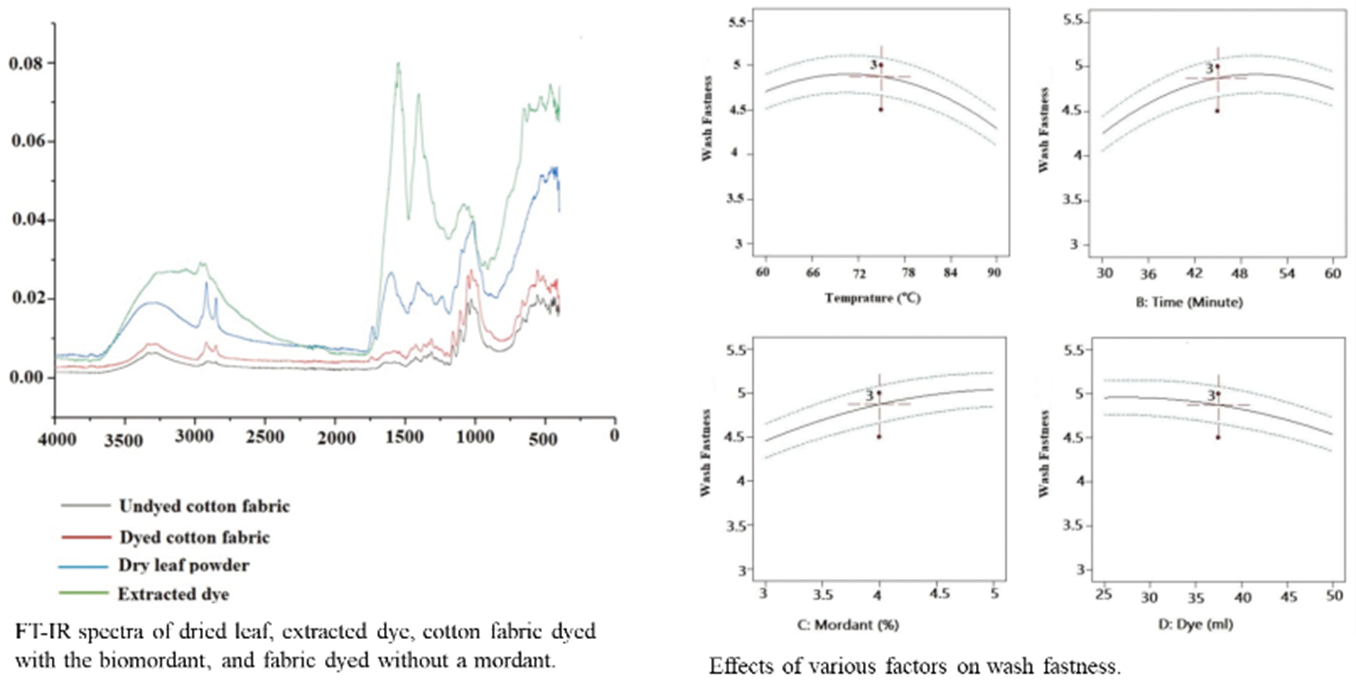
This study investigates an eco-friendly textile dyeing process for cotton using Urera hypselodendron leaf extract, employing wood ash as a sustainable bio-mordant. Pre-mordanting methods optimized at 72.25°C for 51.59 minutes with 4.99% mordant concentration produced uniform, yellowish tones with a color strength (K/S) of 2.704. These findings offer a viable, non-toxic alternative to synthetic dyes, supporting sustainable practices in the textile industry. (論文連結)
|
|
This study supports the development of sustainable textile industries by replacing toxic synthetic dyes with eco-friendly alternatives. Key applications include (a) eco-friendly manufacturing: reducing environmental pollution and health risks (carcinogens/allergens) through biodegradable plant-based materials, (b) cost-effective production: using wood ash, an inexpensive agricultural waste, makes the process scalable and affordable for developing regions, (c) functional textiles: creating value-added apparel with natural antimicrobial and UV-protective qualities, and (d) circular economy: repurposing agricultural by-products into industrial resources. These results provide a standardized framework for industries to adopt "green" dyeing without sacrificing color uniformity or fastness. |
|
Globally, this research helps reduce the discharge of toxic, non-biodegradable synthetic dyes into water systems, mitigating widespread environmental damage. Nationally, for countries like Ethiopia, utilizing indigenous plants and agricultural wood ash reduces dependency on expensive imported chemicals while fostering a circular economy by transforming waste into industrial resources. Ultimately, this promotes public health by providing non-carcinogenic textile alternatives, helping the industry meet the rising international demand for sustainable and environmentally responsible manufacturing. |