
Industry Collaboration
*Industry Collaboration
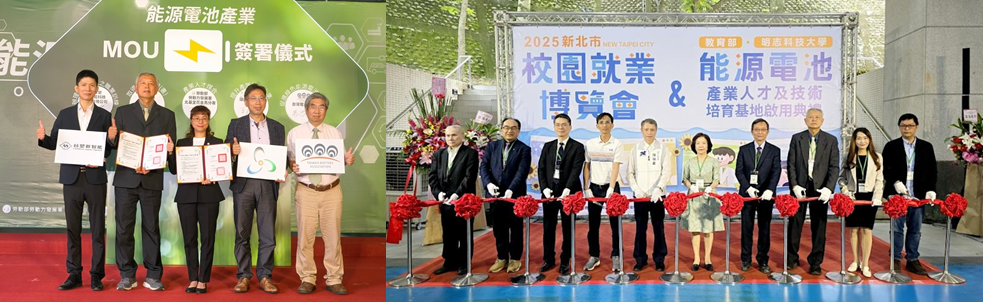
CER maintains strong partnerships with more than 200 leading companies and industrial organizations. Through close collaboration with industry, CER integrates academic research, engineering education, and real-world technological applications. These partnerships support innovation, accelerate technology transfer, and ensure that CER’s teaching and research remain aligned with emerging industrial needs and global technological trends.
Joint Research Projects
CER actively collaborates with industry partners on joint research projects that address technological challenges in advanced materials, semiconductor technologies, energy storage systems, environmental engineering, and green manufacturing. These collaborative projects enable faculty and industry experts to work together to develop innovative technologies and practical engineering solutions.
Industry-Sponsored Laboratories
Several research laboratories within CER are supported by industry partners to promote applied research and technology development. These industry-sponsored laboratories provide advanced research platforms where faculty members, researchers, and students can collaborate with industrial experts to develop next-generation technologies and industrial applications.
Internship Programs
CER provides extensive internship opportunities through its strong network of industry partners. Students are able to gain hands-on professional experience in real industrial environments, allowing them to apply engineering knowledge, develop professional skills, and better understand industry practices before graduation.
Industry Co-Teaching Courses
Many CER courses are co-taught with industry professionals who bring real-world engineering experience into the classroom. Through industry co-teaching, students gain insights into current industrial technologies, engineering practices, and emerging technological trends.
Capstone Project Mentoring
Industry experts actively participate in mentoring capstone design projects, guiding students to solve real-world engineering problems. These projects often focus on practical industrial challenges and provide students with valuable experience in engineering design, teamwork, and innovation.